Source: Andy Rodriguez / 500px / Getty
The History & Future of Downtown Dallas Architecture
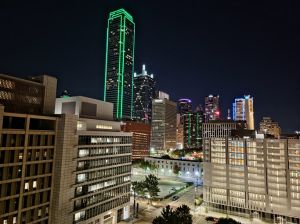
Downtown Dallas is one of the most recognizable urban cores in Texas, known for its high-rise skyline, historic buildings, and cultural landmarks. But behind the tall glass facades and vibrant arts venues lies a story of boom, bust, and reinvention — one that raises big questions about how we preserve history while accommodating growth.
A Brief Architectural History
The architecture of Downtown Dallas reflects waves of economic change.
Early 20th-century commercial buildings like the Kirby Building (completed in 1913) showcase Gothic Revival and early high-rise design and were central to Dallas’ emergence as a regional business hub. In the 1920s, structures like the Dallas Cotton Exchange Building symbolized Dallas’ role in national trade — though many such buildings later sat vacant and were eventually demolished or repurposed. [Wikipedia]
By the mid-20th century, landmark venues like the Majestic Theatre became cultural anchors, while Art Deco and Moderne-style towers such as the Tower Petroleum Building reflected the city’s commercial aspirations. [Wikipedia]
Love Local? Get more! Join the 97.9 The Beat Newsletter
We care about your data. See our privacy policy.
Designs by world-renowned architects also shaped Dallas’ identity. For example, famed architect I.M. Pei helped define the skyline and arts district with modernist contributions like the Morton H. Meyerson Symphony Center and the angular form of Dallas City Hall — though the future of City Hall itself is now under discussion for redevelopment. [Axios]
Dallas City Hall in downtown Dallas was designed by world-famous architect I.M. Pei and completed in 1978, replacing an older municipal building as the city’s seat of government; it’s noted for its inverted-pyramid modernist form and civic plaza. The complex sits on an 11.8-acre site at 1500 Marilla Street and includes office space, public chambers, and underground parking. [Wikipedia]
The Modern Vacancy Challenge
Even as Dallas grows as a metro area, Downtown has struggled with office vacancy. According to recent real estate data, Downtown Dallas’ office vacancy sits near **26–27%**, making it one of the highest among central business districts in the U.S., behind only cities like Seattle. In contrast, nearby Uptown Dallas and many suburban markets have much lower vacancy rates. [Downtown Dallas, Inc.]
This trend is driven by several factors:
- Outdated office buildings that lack modern amenities.
- Corporate relocations to newer spaces Uptown or in the suburbs.
- Remote and hybrid work reducing demand for dense office space.
Major employers, including AT&T, have announced moves from downtown to suburban campuses, citing preferences for different work environments and available land — a shift that could fundamentally alter downtown’s economic fabric. [Wall Street Journal]
Comparing Vacancy: Downtown vs. Other Cities
Downtown Dallas is not alone. Many U.S. urban cores are grappling with high vacancy:
- San Francisco Financial District — ~30% vacancy
- Denver CBD — ~30% vacancy
- Seattle CBD — ~30% vacancy
- Downtown Dallas — ~26% vacancy
These challenges reflect broader economic shifts — including remote work trends and rising costs of aging office infrastructure — impacting downtown districts nationwide. [Downtown Dallas, Inc.]
The Debate: Preserve or Redevelop?
**Option 1: Historic Preservation**
Preserving the architectural heritage of Downtown Dallas means protecting buildings that tell the city’s story — structures with unique design, cultural significance, and ties to community identity. Preservation strategies often include adaptive reuse (converting offices into apartments, hotels, or cultural spaces), tax credits, and historic district protections. Adaptive reuse projects, like converting empty offices into residences, are already underway and seen as ways to bring life back to the urban core. [The Texas Tribune]
Preservation supporters argue that:
- Historic buildings contribute to cultural identity and tourism.
- Adaptive reuse can create mixed-use neighborhoods with living, working, and social spaces.
- Preserving history strengthens community continuity.
**Option 2: Large Corporate Investment & Redevelopment**
Others argue that selling development rights or encouraging large corporate investment is necessary to bring modern amenities, jobs, and infrastructure to the area. Proponents of redevelopment point to new projects like convention center expansions, entertainment venues, and major commercial investments that can reinvigorate downtown. [CRE Daily]
Redevelopment supporters suggest:
- Modern buildings can attract new business and residents.
- Strategic redevelopment can create million-dollar economic growth.
- Investors might be willing to fund infrastructure that historic preservation alone cannot.
Both sides agree that a balance between preservation and modernization may be the key to Downtown Dallas’ future.
What’s Next?
Downtown Dallas is at a crossroads — with vacancy and corporate shifts prompting tough questions about how the city should grow. Should historic buildings be saved and reused? Or should large-scale investment reshape the skyline for future economic needs? These conversations are happening among city leaders, developers, preservationists, and residents alike.
Understanding the history of Dallas architecture helps ground these debates in context, while vacancy trends show that change is already underway — whether through conversion projects or market shifts. Your voice as a community member matters as Downtown evolves.
Part 2 will dive deeper into what development could look like for Downtown Dallas.