Karmelo Anthony Trial Sparks National Debate On Race & Justice
Karmelo Anthony Trial Sparks National Debate On Race & Justice
- Interracial violence cases often symbolize broader issues of injustice and bias in the justice system.
- Public perceptions of the case are shaped by personal experiences, beliefs, and racial identities.
- Advocacy groups' involvement can reinforce narratives about race and fairness, even when not central to the legal dispute.
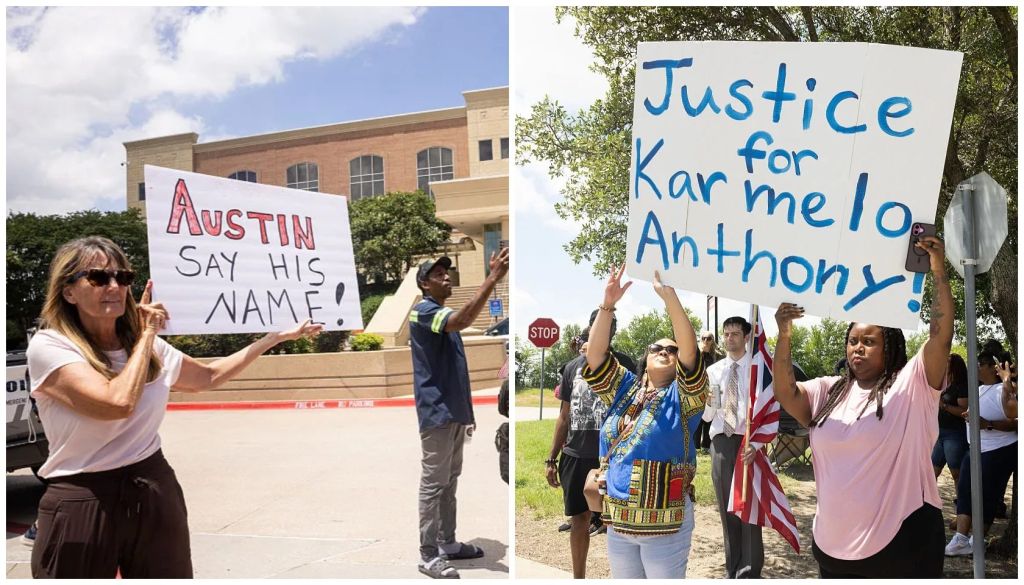
The murder trial of Karmelo Anthony has expanded beyond the courtroom as Anthony was sentenced to 35 years in prison on June 9. This trial has become a part of a broader debate over race and the justice system.
Juries were ultimately asked to decide whether Anthony’s stabbing of Austin was justified as self-defense. However, many people are viewing the case through broader concerns about fairness, bias, and trust in the justice system, turning the case into a proxy for larger debates about justice and race.
criminologist and sociology professor at Texas A&M University, Jonathan Reid, “It’s an interracial case of violence and oftentimes historically in America these individual cases have been used as proxies for broader symbolic and systematic issues of injustice.” Research has shown that public perceptions of violence can change depending on the race of the victim and offender, leading many people to view cases like Karmelo Anthony’s through broader questions about fairness.
It’s said that people often view cases through the lens of their own experiences, beliefs, and identities, says Jonathan Reid. If you’re black, you might see it a certain way, and if you’re white, you may see it a different way. Anthony, who is a black teen, was charged with first-degree murder in the deadly stabbing of Austin Metcalf, who was a white 17-year-old male. The incident took place at a track meet in Frisco, Texas, a suburb of Dallas. Anthony said he was acting in self-defense.
This week, outside of the Texas courthouse, Anthony’s supporters gathered to back his self-defense claim. Across the street, members of a white supremacist group gathered with signs refrencing metcalf even as his family publicly refused to frame the case as a racial issue.
One of Anthony’s supporters, by the name of Brittany Coakley, told the Dallas Morning News, “So many of us Black Americans have similar stories of us being bullied or harassed by these people, and when we try to defend ourselves, it’s an issue.” A member of the white supremacist group National Organization for Vital Action, Russell Womack, told news outlets that this case highlights black-on-white violence, and if this case wakes up white people, then a tragic reluctant martyr, Austin, will have to be.
Did Karmelo Anthony have an all-white jury?
In addition to the tensions that were already heightened, they flared further after a white jury was selected for this trial.The defense attorney had objected to the removal of two black potential jurors from the pool. The judge, however, noted they were removed for a race-neutral reason because of their occupation as educators.
Dave Aronberg, a former state attorney in Florida, told NewsNation. “You would hope that the jury would be a reflection of the community, but it does happen that you could get an all-white jury, and it could be upheld in the courts, because it depends on how the prospective jurors answer the questions.”
Metcalf’s father has condemned those who seized on the race of the teens after the killing.He told Fox News, “This was not a race thing. This is not a political thing. Please do not comment if you do not know what happened. This is a human thing; this person made a bad choice, and it affected both his family and my family forever.”
Anthony’s family said that they have also faced racial attacks, causing them to have to relocate for their safety.
During a press conference last year, Anthony’s mother, Kala Hayes, said, “In the wake of this tragic incident, our family has been under attack. Whatever you think happened between Karmelo and the Metcalf boy, my three younger children, husband, and I didn’t do anything to deserve to be threatened, harassed, and lied about.” Cases surrounding interracial violence have historically become symbols for broader debates about race and injustice in America, depending on which side of the coin you’re on.
A civil rights organization, ” The Next Generation Action Network, ” backed Anthony and his family early on in this case, serving as their spokesperson in the media. He gave a statement saying, “Oftentimes groups see cases like this as a byproduct of the broader biases and the broader injustices that may be happening in society.”
These organizations have also helped with fundraising efforts, so Anthony’s family could pay legal fees. The family was able to raise $500,000 but faced severe harassment online, accusing them of misusing funds for a new house and car. However, Anthony’s attorney told the judge during his bond hearing that most of the funds were spent on legal fees.
Jonathan Reid says that public support from advocacy groups focused on criminal justice reform or racial justice can also shape how people perceive a case; their involvement may reinforce broader narratives about race and fairness even when those issues are not central to the underlying legal dispute.


You May Also Like