Man Arrested for Repainting Oak Lawn Rainbow Crosswalk
- Texas governor mandates removal of decorative crosswalk designs, citing political messaging and driver distraction.
- Dallas resident arrested for attempting to repaint the rainbow crosswalk after city began its removal.
- Constitutional lawyer says state's actions are legal as long as rule is applied uniformly across all crosswalks.
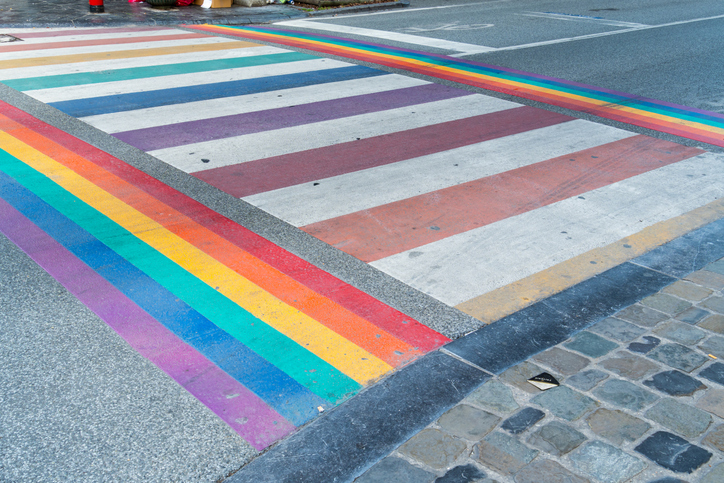
A man was arrested Tuesday morning after being caught repainting the rainbow crosswalk in the Oak Lawn neighborhood of Dallas, Texas, only one day after the city began the removal of the display to comply with the state mandate.
TRENDING: The Biggest Dallas News Stories Of 2026
The suspect was spotted around 3:30 am by Dallas police near Cedar Springs Road on Knight Street. Officers found the man with a bag of chalk and paint; he reportedly outlined the rainbow and planned to fill it with chalk. He remains in police custody on misdemeanor graffiti charges. Authorities have not yet released the suspect’s name, and the investigation into his identity is ongoing, according to police.
Removal of the sidewalk began Monday morning as Dallas works to comply with a TxDOR order Governor Greg Abbott called for last year. The order was for the removal of decorative designs on public roadways, labeling them as “political messaging” as well as a distraction to drivers. If cities didn’t comply with the order, Abbott threatened to withhold state funding from them.
TRENDING: DFW Airport Update: TSA Shortage & Possible ICE Deployment
In October 2025, TxDOT notified city officials that the rainbow design did not meet standards set by the Texas Manual on Uniform Traffic Control Devices. Though Dallas tried to preserve the markings, TxDOT issued a final denial on January 15th.
The affected crosswalks include a Black Lives Matter crosswalk in Fairpark. The city is hoping to complete this project within three weeks.
According to the North Texas LGBTQ Chamber Foundation, the Oak Lawn crosswalks were initially funded by more than $100,000 in donations. Residents gathered on sidewalks Monday to watch the removal, with many expressing feelings of being targeted.
Chair of the LGBTQ Chamber of Commerce Foundation, Valerie Jackson, expressed to news stations that her personal emotions are grief and that it’s interesting that it would take tax dollars to remove these.
David Coale, who is a constitutional lawyer, noted that the state’s actions are legal as long as the rule is applied uniformly.
“If they have a rule that purports to be about anything in a crosswalk, but they only enforce it against certain kinds of crosswalks, there might be some argument there,” Coale said. “But generally speaking, when the state spends money, it gets to put conditions on it.”
In response to these artistic cover-ups, the office of arts and culture is developing alternative programs to recognize neighborhood identities and public art that don’t involve pavement markings. Dev Rastogi, who is the assistant city manager, stated in a memo to the city council that the city is reviewing how peer cities handle similar requests.
Three community engagement sessions for residents have been scheduled for the following:
- Uptown: 5:30 p.m. April 6 at Theater Three, 2688 Laclede St.
- South Dallas: 5:30 p.m. April 8 at the South Dallas Cultural Center, 3400 S. Fitzhugh.
- Cedar Springs: 5:30 p.m. April 10 at the Reverchon Recreation Center, 3505 Maple Ave


You May Also Like