Team Save City Hall or Say Yes to Downtown Dallas?
- Preservationists aim to save City Hall's architectural significance, while redevelopment advocates want to seize a broader downtown opportunity.
- Repair costs and long-term funding are key concerns, with both sides making compelling but conflicting arguments.
- The real issue is balancing civic memory, public trust, and economic vision for Dallas' future.
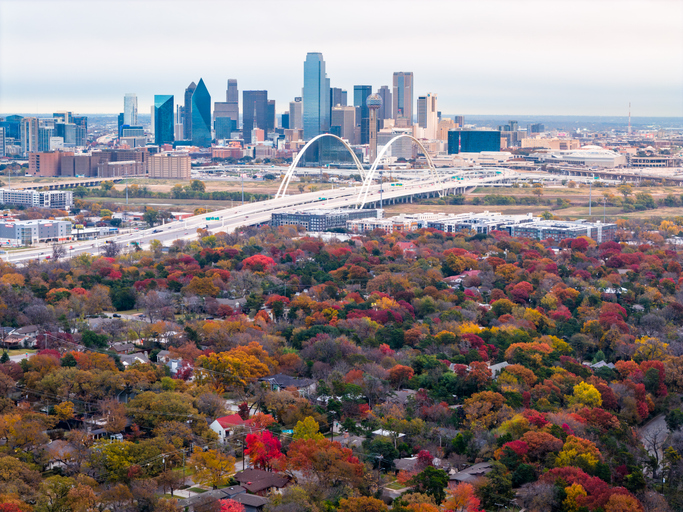
Dallas and City Hall now
Dallas remains one of the country’s largest cities and the anchor of the Dallas–Fort Worth region, so decisions about its civic core have outsized symbolism and practical impact. City Hall, the I.M. Pei-designed building at 1500 Marilla Street, is now at the center of a major dispute over repair costs, preservation, downtown redevelopment, and the location of city services. Public discussion in 2026 has focused on whether Dallas should repair and keep the building, preserve it in part, move city operations, or fully relocate and redevelop the site.
Save Dallas City Hall
“Save Dallas City Hall” is a preservation coalition of community groups, residents, local business owners, architects, and preservationists formed to push back against what it sees as a rushed decision to abandon the building. The organization says it launched a website, yard sign campaign, and social media outreach beginning as early as March 2025 to increase transparency and slow the timeline around City Hall’s future. In practical terms, its pitch is that City Hall is historically and architecturally significant, and that Dallas should explore a mixed-use civic future rather than demolition or abandonment.
Say Yes to Downtown
“Say Yes to Downtown” appears to be an advocacy group supporting relocation of City Hall as part of a broader downtown redevelopment vision, and recent reporting ties the effort to former Mayor Mike Rawlings. The group describes itself as representing residents, investors, and stakeholders who want to move beyond the current site and pursue a different downtown configuration. Based on current reporting, this side of the debate is more explicitly aligned with redevelopment momentum and with reshaping the southern part of downtown around new private and civic investment.
How to compare them
Pros and cons
For Save Dallas City Hall, the main strengths are preservation, architectural continuity, and a stronger emphasis on public process. Its weaknesses are that repair and renovation costs may be very high, and preservation alone does not automatically solve downtown’s broader economic or space-planning challenges. Candidly, it’s important to note that the group’s moral force is strong even when its financial case may be harder to close.
For Say Yes to Downtown, the strengths are speed, redevelopment potential, and the chance to rethink downtown around transit, entertainment, and new investment. Its weaknesses are equally significant: demolition or relocation can erase civic memory, deepen skepticism about developer influence, and create long-term costs that are easy to underestimate. This side may offer a more dramatic economic vision, but it also carries a higher trust burden.
To Be Fair:
It’s important to avoid treating repair-cost estimates as settled truth, because current reporting shows those figures are still part of an active political fight. It is also important to avoid assuming preservation as automatically cheaper or more civic-minded, since older buildings can demand expensive rehabilitation and long-term maintenance. The cleanest structure is: explore the controversy, study both groups, list the tradeoffs, then close with the fact that the real issue is not just the building but the future shape of downtown Dallas.
Where readers can continue
Useful places to keep exploring include the city’s official government pages, which provide the most direct public context on Dallas leadership and City Hall. The Save Dallas City Hall coalition’s own site is important for its preservation argument and campaign materials. For broader civic and journalistic context, recent coverage from Dallas-focused outlets has tracked the debate’s escalation, the preservation push, and the role of former Mayor Mike Rawlings.