Supreme Court Rulings That Impacted Black Americans This Week
Every Supreme Court Ruling That Impacted Black Americans This Week
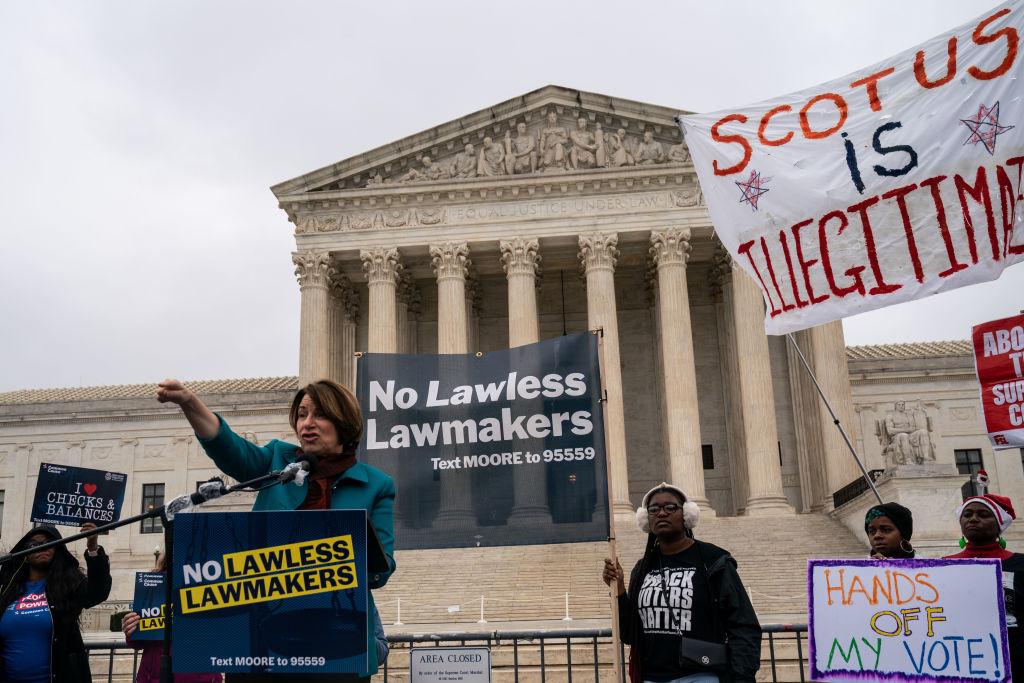
For many Americans, Supreme Court rulings can feel distant, legal debates unfolding hundreds of miles away in Washington. But this week’s decisions reach far beyond the courtroom, affecting families, workers, voters, consumers, and anyone who carries a cellphone. From a decision on birthright citizenship to mail-in voting, the final days of its 2025-2026 term, the Supreme Court handed down five decisions between June 29 and July 1 that will directly shape the lives of Black Americans for years to come.
Here is what we know.
1. The Supreme Court upholds Birthright Citizenship.
The week’s most closely watched decision centered on birthright citizenship. On June 30, the Supreme Court rejected President Donald Trump’s effort to end automatic U.S. citizenship for many children born on American soil to undocumented immigrants or temporary visa holders. The ruling leaves intact a constitutional principle that has stood for more than 150 years under the 14th Amendment: with limited exceptions, children born in the United States are citizens at birth.
In a 6-3 ruling (Trump v. Barbara), Chief Justice John Roberts wrote for the majority, reaffirming that the 14th Amendment explicitly guarantees citizenship to anyone born on American soil. Conservative Justices Brett Kavanaugh and Amy Coney Barrett joined the liberal minority to form the majority, firmly blocking Trump’s attempt to alter citizenship rules by executive order.
For Black immigrant families expecting children, the decision removes immediate uncertainty over whether their newborns would be recognized as U.S. citizens. While political debate over immigration is likely to continue, the Court’s ruling means citizenship remains protected under existing constitutional law.
2. Federal Reserve Governor Lisa Cook allowed to keep job, amid investigation.
The Court also declined—for now—to allow the removal of Federal Reserve Governor Lisa Cook while litigation continues. In a 5-4 decision (Trump v. Cook) handed down on June 29, the justices denied the administration’s emergency request to stay a lower court injunction, allowing Cook to remain in office while her case proceeds. Chief Justice Roberts noted that allowing an at-will firing would break with the nation’s long tradition of keeping central banking free from political interference. The justices also argued that “The President failed to afford Cook the procedural protections to which she was entitled by statute” after he attempted to fire her over unsubstantiated claims of mortgage fraud last fall.
“Cook was entitled to notice and some opportunity to respond before her termination,” they added in their decision.
Although the case centers on a single government official, the broader question is whether presidents can more easily replace leaders of independent agencies. The Court’s action allows Cook to remain in office while the legal dispute proceeds.
According to USA Today, Trump reacted to the verdict on Monday, telling reporters inside the Oval Office:
“I guess I have to accept it. It’s the Supreme Court so I’ll accept. I think it’s very bad for the nation.”
3. Voting by mail policy in Mississippi upheld.
Another ruling, delivered Monday, will impact millions of voters who rely on the postal system to cast their ballots in Mississippi. The Court upheld the state’s practice of counting mail-in ballots that are postmarked by Election Day but arrive several days later. In doing so, it rejected the Fifth Circuit’s interpretation of the federal Election Day statutes, an interpretation that would have invalidated longstanding absentee ballot receipt laws and disenfranchised voters who complied with every election requirement but were affected by postal delays beyond their control, the ACLU noted.
For military personnel, Americans living overseas, rural voters, and others who depend on the mail, the decision helps ensure that ballots mailed on time are counted, rather than rejected solely because of delivery delays outside the voter’s control.
4. Supreme Court rules constitutional protections apply to location data.
The Court also addressed one of the fastest-growing questions in constitutional law: how much location data the government may collect. In Chatrie v. United States, the U.S. Supreme Court ruled 6–3 that law enforcement generally must obtain a warrant before using a geofence warrant to collect broad sets of cell phone location data. The Court held that individuals retain a reasonable expectation of privacy in their historical location information and rejected the argument that users automatically forfeit Fourth Amendment protections by enabling location services.
The case arose after police investigating a Virginia bank robbery obtained a geofence warrant requiring Google to disclose anonymized location data for all devices within a 150-meter radius of the bank during the time of the crime. The Court concluded that such sweeping requests constitute a search under the Fourth Amendment because they compel technology companies to reveal the location information of numerous individuals, most of whom are not suspected of any wrongdoing.
“An individual has a reasonable expectation of privacy in records about his cell phone’s location, and police intrude on that constitutionally protected interest when they demand the information – even though for only a limited time, and from a third-party tech company,” Justice Elena Kagan wrote of the Supreme Court’s decision, according to the Guardian.
The decision signals heightened constitutional scrutiny of digital surveillance and is expected to shape how law enforcement uses location data in future criminal investigations.
5. Supreme Court expands presidential power to remove leaders of independent regulatory agencies.
Perhaps the ruling with the widest long-term consequences involves presidential authority over independent federal agencies.
The Court expanded presidential power to remove leaders of many independent regulatory agencies, weakening decades-old protections that limited political interference. While the Federal Reserve appears to retain a unique status, the decision could affect agencies responsible for enforcing workplace discrimination laws, consumer financial protections, and other federal regulations.
Supporters argue the ruling strengthens democratic accountability by giving elected presidents greater control over the executive branch. Critics contend it could make traditionally independent watchdog agencies more vulnerable to political pressure, depending on who occupies the White House.
Why This Week Matters
For immigrant families, voters, consumers, workers, and anyone concerned about digital privacy or even birthright citizenship, the effects of this week’s Supreme Court rulings may be felt long before the legal debates end. Some rulings preserve longstanding constitutional protections, while others expand presidential authority in ways that could reshape the federal government for years to come.
SEE MORE:
Every Supreme Court Ruling That Impacted Black Americans This Week: June 24
The Big ‘Beautiful’ Bill: 1 Year Later With Lenny McAllister
Every Supreme Court Ruling That Impacted Black Americans This Week was originally published on newsone.com